See the facts clearly, speak the truth plainly, and hold the line between what you will and will not accept.
Queen of Swords at a glance
- Upright keywords
- Clear discernment · Candid communication · Holding boundaries
- Reversed keywords
- Judgment clouded by emotion · Sharp tongue · Communication breakdown
- Time to act?
- Upright: a good time to act; reversed: it depends on conditions
- Upright advice
- Turn a vague demand into a specific question they can actually answer.
What does the Queen of Swords mean upright?
The Queen of Swords upright represents making judgments based on facts and stating what matters honestly and directly. You can care deeply about someone while still recognizing contradictions in their story, without needing to invent excuses for every flaw.
The suit of Swords connects to the air element, governing thoughts and words; here, that appears as thinking things through cleanly and speaking accurately. When faced with vague promises, you ask for specifics rather than accepting pleasant words in place of answers.
Independent judgment also means listening to different viewpoints while holding firm to your own boundaries. When someone flips through your personal journal, you close the notebook and state clearly what you do not wish to share.
You do not need to say yes just to keep the peace, and you can still hear what they were looking for. Experience lets you see people's flaws without rushing to discard the entire person.
What does the Queen of Swords mean reversed?
The Queen of Swords reversed can indicate that emotions or personal ties are clouding your judgment, leading to conclusions before all the facts are in. When someone close asks a favor, you overlook your established rules, nodding yes only to feel your stomach knot up afterward.
The visible sign is giving people you know a pass while holding others to far stricter standards. Step back and let the same facts be tested by the same measure.
Another possibility is speaking with excessive cruelty, where coldness or bitterness inflicts real damage on a relationship. The action is seizing on a single mistake and digging in with sarcasm, refusing to listen to explanations.
You might be enduring biting words, or striking back with the same venom after being hurt. When the harshest comment rises to your tongue, try describing what happened while dropping the sweeping verdict on their character.
What does the Queen of Swords mean in love?
Single or getting to know someone
Upright: You can be interested in someone while being clear about your own pace. If they suggest swapping house keys early on, you can say, "I want to get to know you at my own pace." The depth of closeness is yours to decide by how much you choose to share.
Reversed: Suspicion easily turns dating into an interrogation, digging into every unfamiliar name they mention. When your shoulders stiffen, pause the barrage of questions and set down unverified guesses. Wait until you can listen to a complete answer before continuing.
In a relationship
Upright: Two people can love each other while maintaining independent lives. On a weekend, you head to choir practice while your partner fixes their bike; having separate pursuits is a healthy form of partnership. Notice whether your partner respects your independent schedule or demands that all time be shared.
Reversed: Arguments can degenerate into harsh words meant to force compliance, where requests sound like threats. Hearing them speak makes your jaw clench, wanting to explain but afraid to speak up. If a relationship involves control, talk to a trusted friend or counselor to plan support, rather than enduring it alone.
After a breakup or hoping to reconcile
Upright: Before reaching out again, look at the reasons for the breakup through facts. When organizing the return of shared belongings, write down what was promised versus what actually occurred. If you hope to reconcile, pick one concrete term that must be renegotiated, rather than relying solely on missing them.
Reversed: Grief after a split can morph into an urge for payback, wanting to tear up their old cards and make sure they know how furious you are. Holding the paper, ask yourself: what do I want this gesture to say for me? Share that hurt with someone who can help you process it, keeping your present life separate from the past.
When drawing the Queen of Swords, what are the other person's thoughts and feelings toward me?
Cards cannot confirm another person’s true feelings; this section helps you explore possibilities rather than answer on their behalf.
Upright: They may value your honesty and weigh feelings carefully, preferring to listen thoughtfully to how you view the connection rather than making grand romantic gestures.
Reversed: Suspicion or guardedness can make them withhold feelings or steer away from relationship talks, though that does not automatically mean they do not care.
What does the Queen of Swords mean for work and money?
Job hunting and interviews
Upright: Evaluating job offers calls for analyzing conditions carefully, without letting a prestigious title obscure daily duties. When reading "assist with other tasks" in a job description, map out the responsibilities you can handle on one page.
Distinguish main tasks from items needing clarification to compare options fairly.
Reversed: Other people's preferences can freeze your job search; you might close an application for a research assistantship because family members consider the title unimpressive. Give yourself time away from persuasion before responding. Which reason in this decision comes from your own verified research?
In your current job
Upright: A straightforward mentor might offer corrections that sting to hear, yet genuinely improve your work. Seeing "insufficient evidence" marked in red next to your draft tightens your chest. Next time, ask them to identify which specific data points are missing, anchoring critique to actionable fixes.
Reversed: Nitpicking tinged with resentment stalls collaboration into mutual blame. Holding a handover list, you hear "That's just how your team works" without any specific error named. Watch whether what follows is a workable revision or personal disparagement; the two require very different responses.
Money
Upright: Helping someone financially requires empathy paired with clear boundaries. If a relative asks for car repair money, you may want to help while avoiding misunderstandings around repayment. Start with, "Let's be clear on the repayment terms," agreeing on sums and dates before deciding to lend.
Reversed: Vague financial agreements make lent money difficult to recover; saying "pay whenever it's convenient" makes following up feel awkward. When the topic brings a heavy heart, decline if they ask for another loan. Settle the previous agreement before lending more, rather than using a new loan to avoid an uncomfortable conversation.
What does the Queen of Swords mean for friends, family and coworkers?
Upright: Fairness does not mean defending people you like; it includes hearing the other side out. When a friend vents and asks you to take sides, you want to support them without joining in blaming the other person. Say, "I want to hear the full story," letting your friend decide how much to share.
Reversed: The need for alone time can be misunderstood when expressed coldly. A roommate knocks on your door to chat and you snap "Whatever," feeling irritable the moment you turn away. Schedule quiet time with earplugs, and discuss how you share space once your breathing eases.
What does the Queen of Swords mean for personal growth?
Upright: Knowing yourself honestly includes knowing which beliefs you are open to re-examining. In a discussion group where someone challenges your stance, read an article from an opposing perspective instead of firing back. Summarize its strongest evidence, giving your judgment fresh material to engage with.
Reversed: When emotion clouds judgment, self-criticism can turn vicious; hitting a wrong note on the piano prompts internal insults. When your fingers freeze, halt the self-blame and take your hands off the keys to rest. Once relaxed, identify which measure had the error, without turning one slip into an indictment of yourself.
What can you do when the Queen of Swords is your advice card?
Upright: Turn a vague demand into a specific question they can actually answer. If told to "put more effort in," ask, "Which part would you like me to adjust?" Listen to the answer, state your limits, and remain grounded in facts while leaving room for input before making your judgment.
Reversed: Before delivering a verdict, try paraphrasing the other person's position completely to ensure you heard it right. If anger makes you hunt for flaws, focus on the practical difficulty they face. You can hold a differing opinion while choosing not to weaponize cruel phrasing.
Does the Queen of Swords say yes to what you asked?
Upright: It is a favorable time to establish facts, clarify disputes directly, or decline overstepping requests. If asked to sign an unreviewed document, state that you will read it first without rushing.
Reversed: It depends on whether you intend to mend communication or use words to inflict hurt. Clarifying misunderstandings is worth doing; launching attacks to humiliate someone should be held back.
Common questions about the Queen of Swords
What kind of person does the Queen of Swords represent?
This card represents someone with independent judgment and a commitment to fairness, unafraid to speak the plain truth. When asked for advice, they look at whether arguments hold up rather than flattering friends. Reversed, they may come across as sharp-tongued or swayed by emotion, using criticism to dominate others.
If the Queen of Swords reversed appears in a future position, what should I watch for?
It serves as a reminder not to let emotional bias distort judgment or let cutting words shut down conversation. If making decisions together, agree on the necessary information beforehand. When differences arise, return to those facts instead of filling the gaps with personal bias.
When drawing the Queen of Swords, how should I approach studying?
Focus on verifying sources and expressing concepts with precision to understand how conclusions are reached. When meeting an unfamiliar finding, trace citations back to primary data and explain the logic in your own words; reversed warns against letting debates over who is right replace understanding the problem.
A note from stilltarot
After saying no, your jaw might remain tense as you replay the sentence in your head. Wanting to be precise while not pushing people away can both live in your heart. Practice one short sentence today: "I am not willing to do that," letting it stand on its own without rushing to add self-blame.
How it differs from similar and opposite cards
- Similar: Queen of Cups: Both cards hold the Queen rank, contrasting their approaches to care. The Queen of Cups aligns with the water element, prioritizing feelings and heartfelt connection, while the Queen of Swords aligns with the air element, prioritizing clear thinking and honest expression.
- Opposite: Queen of Pentacles: The Queen of Swords and Queen of Pentacles share the Queen rank while embodying the opposing elements of air and earth. The former masters life through intellect and communication, while the latter nurtures life through physical wellbeing and daily routine.
What do the imagery and Waite’s original text of the Queen of Swords mean?
In the 1909 Rider-Waite-Smith card, the Queen sits upon a stone throne, holding an upright sword in her right hand with its pommel resting on the armrest, while extending her left hand outward. In his 1910 work The Pictorial Key to the Tarot, A.
E. Waite describes her expression as stern and familiar with sorrow, listing sadness, absence, and separation among upright meanings, with malice and deceit when reversed.
- Upright sword: The vertically held sword represents the pursuit of truth and clear, uncompromising judgment.
- Outstretched left hand: The open left hand signals receptivity to others' input and willingness to consider different views.
- Cherub on throne: The carved cherub shows that a tender, compassionate core sits beneath the stern exterior.
- Butterflies on throne: Butterflies carved on the Queen's seat symbolize transformation and freedom of thought.
Related cards
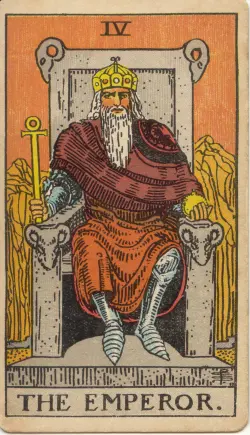
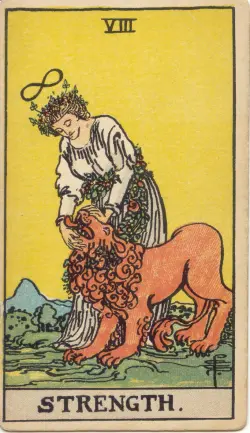
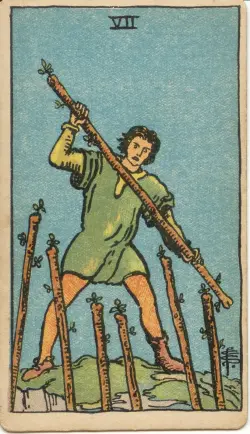
Something on your mind? Let the cards help you look at it.
Ask a question with three cardsSources
- A. E. Waite | The Pictorial Key to the Tarot, Part III §2: Queen of Swords: Original description of the card illustration and upright and reversed divinatory meanings.
- Queen of Swords | Biddy Tarot: Reference for clear discernment, candor, boundaries, and reversed readings where emotion distorts judgment.
- Queen of Swords | Labyrinthos: Reference for personal space in relationships, verbal wounds, and boundaries around lending money.
- Queen of Swords | Learning the Tarot: Reference for direct honesty, independent fairness, and accepting people's imperfections.
- Queen of Swords | Aeclectic Tarot: Reference for problem-solving through research and precision, and warnings regarding blocked communication.
Meaning updated: 2026-11-04 Card meanings are edited with AI assistance.
Tarot meanings are for self-reflection and reference only. They cannot predict the future, prove what someone else thinks, or guarantee an outcome. For decisions about health, law, money, pregnancy or personal safety, please talk to a qualified professional.