Saying goodbye to turmoil with a tender heart, moving toward calmer waters where you can unpack your emotional baggage in your own time.
Six of Swords at a glance
- Upright keywords
- Leaving turmoil behind · Moving forward with sorrow · Gradual recovery
- Reversed keywords
- Resisting change · Tethered by the past · Internal transition
- Time to act?
- Upright: a good time to act; reversed: it depends on conditions
- Upright advice
- Identify your next stop before leaving an exhausting situation, researching routes and necessary preparations.
What does the Six of Swords mean upright?
The Six of Swords upright represents bidding farewell to a turbulent chapter and carrying past experience into a new phase. Leaving is rarely easy; you might grieve the familiar life left behind while recognizing the quieter harbor ahead.
The number six carries the quality of restoration, here meaning finding your footing again after stepping away from conflict. The figures in the boat do not throw all their belongings overboard; you can move forward while carrying feelings that have not yet fully settled.
Change can also unfold within your thinking: looking at a persistent dilemma from a different angle reveals a way through. Rather than looping solely around what you lost, you start seeing the direction you want to take.
Sometimes a helpful person or practical guide aids your path out of confusion. Separating your current reality from the next step allows clear arrangements to support you through transition.
What does the Six of Swords mean reversed?
The Six of Swords reversed represents wanting to move forward while feeling held back by resistance to change or unfinished business. You might know an environment no longer serves you, yet retract your plans whenever the moment to leave approaches.
Being stuck looks like relocating to a new place only to dodge the exact same pattern. Try identifying what is traveling with you rather than simply urging yourself to hurry ahead.
Internal transitions are not always visible from the outside; you might be outgrowing old beliefs while your daily routines look unchanged. Quiet growth looks like walking into familiar places while recognizing the unspoken rules you no longer endorse.
Outward stillness does not equate to stagnation; what matters is how you respond to familiar dilemmas. Linking new understanding to a single small choice meets you where you are far better than forcing dramatic upheaval.
What does the Six of Swords mean in love?
Single or getting to know someone
Upright: You may feel ready to loosen your grip on past relationship baggage and give fresh connection room to breathe. Sharing a train ride with someone new, thoughts of your last breakup surface in your mind. Listen to a simple story they share today before deciding who they are, rather than letting an old ending write the script for a new encounter.
Reversed: Dating someone new, you find yourself searching their messages for phrases your ex used to say, looping in familiar territory. Past hurt can pull you back into anxiety, stalling fresh beginnings. Before digging through message history, ask: what am I trying to verify here, and which doubts actually belong to the past?
In a relationship
Upright: Following a conflict, both of you may be ready to establish a calmer way of interacting. Disagreeing on vacation plans, you stop fighting over who gets the final say and discuss arrangements both can accept. Say: "Let's try a different way of talking this through," inviting your partner to step away from the old dispute.
Reversed: When planning next steps together, old grievances resurface and stall progress. Hearing familiar accusations, you lose track of what you originally wanted to discuss. Notice whether you can both talk through that past conflict fully and return to the present plan, rather than dodging it by changing the subject.
After a breakup or hoping to reconcile
Upright: You want to move past the sorrow of a breakup, but lack the stamina for a busy social life. Renting a bicycle, you pause, noticing there is no one adjusting the seat height for you anymore. Take your time adjusting it to your own comfort today, letting a shared activity find your own pace.
Reversed: Preparing to return their belongings, you tape up the box only to open it again, held back by lingering memories. If hoping to reconcile, separate returning possessions from relationship issues. Start with: "I would like to talk through what was left unsaid last time," giving contact a clear purpose rather than relying on nostalgia.
What does the Six of Swords mean regarding someone's feelings toward me?
Cards cannot confirm another person’s true feelings; this section helps you explore possibilities rather than answer on their behalf.
Upright: They may view your connection as part of their healing, feeling newfound hope after leaving past turmoil behind.
Reversed: They may be weighed down by unresolved past issues, feeling mentally cluttered and struggling to move forward.
What does the Six of Swords mean for work and money?
Job hunting and interviews
Upright: Your next role may prove far healthier than your last, and during the search it pays to identify what strain you genuinely need to leave behind. While reading job postings, highlight work cultures that bring a sigh of relief.
Confirm daily workflows with recruiters, grounding your transition in solid facts.
Reversed: Looking at job postings similar to your current workplace, you want to leave yet gravitate toward familiar setups. Before switching jobs, recall the interaction that drained you most in your last role. If that dynamic repeats in a new job, what different response would you choose?
In your current job
Upright: With projects systematically handed over, workplace pressure finally begins to lift. Opening the status tracker once made your shoulders tense, but now a key column is off your plate. Create a clear handover guide for the person taking over, giving the transition structure while you step back.
Reversed: Lingering resentments can make work harder, pulling new discussions back to who dropped the ball last time. If you feel an urge to defend yourself, pause before speaking. Answer only the immediate operational problem today, without listing their past missteps.
Money
Upright: Financial strain begins to ease, giving your daily life room to stabilize. Receiving confirmation that your final loan payment cleared, you can file the paperwork away. Reflect on how that burden started, and prepare a simple phrase for future solicitations: "I no longer make purchases this way."
Reversed: Fear of opening overdue notices leads to shoving envelopes in a drawer, compounding financial strain. Seeing an envelope makes your chest tight, unsure where to even begin. Take the letters to a qualified financial advisor and ask them to explain repayment paths, rather than letting avoidance substitute for action.
What does the Six of Swords mean for friends, family and coworkers?
Upright: Putting gentle distance between yourself and exhausting social circles is a wise boundary right now. An invitation to a family event known for friction arrives, and you do not want to force yourself to attend. Reply: "I will be sitting this one out," stating your choice clearly without needing to pass judgment on the entire relationship.
Reversed: Unresolved friction among friends can linger even when you move to different social circles. Borrowed camping gear is returned with missing pieces, and at a new gathering you find yourself stewing over it. See if they can address the missing item directly, giving closure to the issue rather than ignoring it by changing companions.
What does the Six of Swords mean for personal growth?
Upright: You are gently recovering from a demanding season, with energy just sufficient for everyday basics. The washing machine finishes, and sitting beside it, hanging up clothes requires multiple breaks. Let yourself rest between loads today; recovery moves at its own pace, without rushing to operate at full capacity.
Reversed: Beneath an ordinary daily routine, you might be letting go of rigid standards. Hitting a wrong note on the piano, your instinct is to restart from the beginning, but this time you play through to the end. Record that imperfect practice, letting yourself hear that altering old habits can be a quiet, private transformation.
What can you do when the Six of Swords is your advice card?
Upright: Identify your next stop before leaving an exhausting situation, researching routes and necessary preparations. If changing study spaces, check transit routes and hours before visiting. Leaving the familiar brings natural hesitation, so let practical planning support your unease as you move toward a healthier setting.
Reversed: Pick a recurring difficulty that followed you across environments and lay out the unresolved core. If responsibilities were left vague, schedule time with those involved to finalize handoffs; if you resist new procedures, write out your hesitation fully.
Giving friction a specific name points the way forward far better than calling it general failure.
Does the Six of Swords say yes to what you asked?
Upright: A good time to step away from turbulent arrangements and transition toward a calmer environment where you can recover. Before making the move, clarify your destination and route so your departure has a practical direction.
Reversed: It depends on whether you are avoiding unresolved issues or navigating an internal shift in perspective. If moving while dodging the same problem, address it first; if responding to old rules with fresh insight, translate that into a small step.
Common questions about the Six of Swords
What kind of person does the Six of Swords represent?
A supportive guide who helps others navigate difficulties with practical methods and clear thinking; or someone journeying toward a new horizon while carrying quiet sorrow. Reversed, it describes someone tethered to the past or resisting necessary change.
Does the Six of Swords always indicate physical travel?
Not necessarily; it can represent a shift in mental perspective. Upright, journeys or changing environments are common meanings, but finding a new solution to an old dilemma in the same place is equally valid. Reversed, transitions often occur internally with no change in itinerary.
What does the Six of Swords suggest for academics?
Upright, it favors stepping away from study methods that stall your progress and finding a clearer system. If a problem makes no sense, seek a step-by-step breakdown to reconnect your understanding. Reversed, if switching textbooks only to bypass the same hurdle, return and master that concept so old gaps do not follow you.
A note from stilltarot
When wanting to leave, your hands may still cling to the familiar; when wanting to move forward, your heart may still grieve the old life. You can carry that tender sorrow while choosing a calmer path for yourself. Pick a route that feels a little less tense as you step outside today, and walk it gently.
How it differs from similar and opposite cards
- Similar: Four of Swords: The Four of Swords focuses on resting in stillness to recover, while the Six of Swords also touches on restoration, but centers on actively leaving turmoil behind through travel or changing your perspective.
- Opposite: The Sun: The Sun radiates vitality and vibrant joy, whereas the Six of Swords reflects a muted, gentle state of getting by day-to-day, distinct from high-spirited celebration.
What do the imagery and Waite’s original text of the Six of Swords mean?
In the 1909 Rider-Waite-Smith deck, a ferryman steers a boat carrying a cloaked adult and child toward the opposite shore, with six swords standing upright before them. In his 1910 book The Pictorial Key to the Tarot, A.
E. Waite observes that the journey is smooth, the freight light, and the work within the ferryman's strength. Divinatory meanings in the original text include a water journey, route, way, and expedient measure.
- Adult and child in a boat: Leaving carries grief and sorrow, while pointing toward a more hopeful shore.
- Six upright swords: Memories and burdens carried from the past travel with the passengers as they journey.
- Rough and calm waters: The contrast between choppy and tranquil waters illustrates leaving turmoil behind for peaceful waters.
- Ferryman: Practical support or guidance from others helps you find clarity and a viable path forward.
Related cards
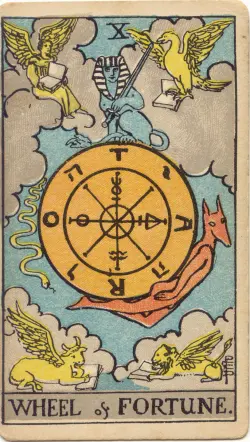
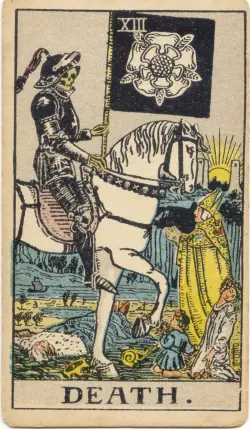
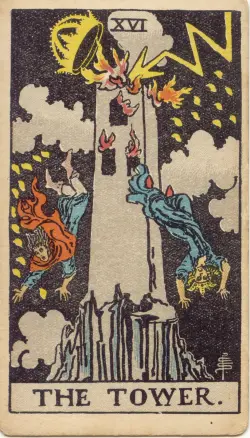
Something on your mind? Let the cards help you look at it.
Ask a question with three cardsSources
- A. E. Waite | The Pictorial Key to the Tarot, Part III §2: Six of Swords: Original description of the card illustration and upright and reversed divinatory meanings.
- Six of Swords | Biddy Tarot: Consulted on transition phases, releasing past baggage, and reversed resistance and internal growth.
- Six of Swords | Labyrinthos: Consulted on leaving turmoil, rational planning, and unresolved issues in love, career, and money.
- Six of Swords | Learning the Tarot: Consulted on low spirits paired with gradual recovery, changing perspective, and card comparisons.
- Six of Swords | Aeclectic Tarot: Consulted on new solutions to old dilemmas and practical assistance provided by others.
Meaning updated: 2026-11-04 Card meanings are edited with AI assistance.
Tarot meanings are for self-reflection and reference only. They cannot predict the future, prove what someone else thinks, or guarantee an outcome. For decisions about health, law, money, pregnancy or personal safety, please talk to a qualified professional.